

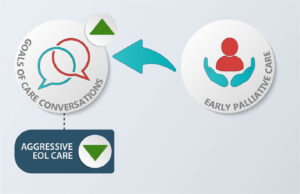
1. Implementation of Early Palliative Care Models
What we do
- Develop and test integrated EPC models for hematologic malignancies
- Improve patient-reported outcomes, quality of life, and daily living with the disease
- Support shared and informed decision-making
Why it matters
Better care pathways → better quality of life.
2. Enhancing Communication & Care of Quality
What we investigate
- How to activate timely goals-of-care conversations
- How to ensure high-quality, patient-centered end-of-life care in acute leukemia and high-risk MDS
Why it matters
Clear communication leads to care aligned with patient values.
3. Understanding Hematologists’ Perspectives
What we explore
- Beliefs, attitudes, and perceptions about end-of-life care
- Adherence to evidence-based quality indicators
- Barriers and facilitators to optimal practice
Why it matters
Improving clinician perspectives improves patient care.
4. Humanistic & Spiritual Approaches in EPC
What we integrate
Spiritual, existential, and humanistic dimensions. Tools to strengthen the therapeutic relationship
Why it matters
Care that sees the whole person – not only the disease.
5. Training for Healthcare Professionals
What we teach
- Symptom management
- Evidence-based communication
- Coping-supporting skills
- Patient and caregiver support
What we evaluate
- How these skills transform EPC practice
- How they increase patient and family engagement in decisions
Why it matters
Better-trained teams → better outcomes for patients.
6. Artificial Intelligence for EPC Innovation
What we develop
- AI tools to identify new, meaningful PROs
- Machine-learning models to determine the optimal time to integrate EPC for each hematologic malignancy
- Personalized EPC pathways based on individual needs and coping profiles
Why it matters
AI helps deliver the right care at the right time.
7. Coping Strategies in Acute Leukemia
What we study
- How patients cope with diagnosis, treatment, and uncertainty
- Quantitative and qualitative patterns of coping
- Tailored interventions to promote adaptive coping and emotional resilience
Why it matters
Supporting adaptive coping enhances engagement and well-being.